
Judging the invisible
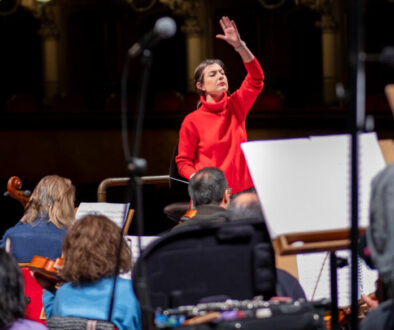
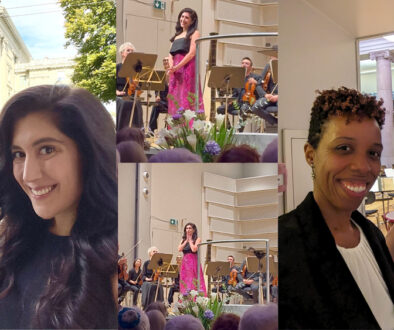
A recent social media post reacting to the latest edition of the La Maestra Competition questioned how conductors are evaluated in competitions today. The author noted that none of the candidates advancing were over their early thirties and observed the uniformly polished stage presence of the semifinalists, while fully acknowledging their talent and hard work. She wondered what might happen if a conducting competition were held behind a screen, removing age, gender, nationality, and appearance, and leaving only the music to be judged.
This thought experiment opens a larger question: how do we define artistic excellence, and how fair can such judgments ever be?
Competitions are curious constructs. They aspire to objectivity, but in the end, they mostly reflect taste. When semifinalists, finalists, and winners are announced and one finds oneself genuinely surprised, it becomes obvious that we are not measuring something mathematical. We are measuring perception. Art is not a stopwatch.
We talk about excellence as if it were a fixed category, but it isn’t. It is filtered through aesthetic preferences, personal biases, institutional agendas, and sometimes simply through what a jury happens to respond to in that very moment. When someone you consider truly exceptional is out, and someone else goes through, it doesn’t necessarily mean one is better. It means somebody preferred one over the other.
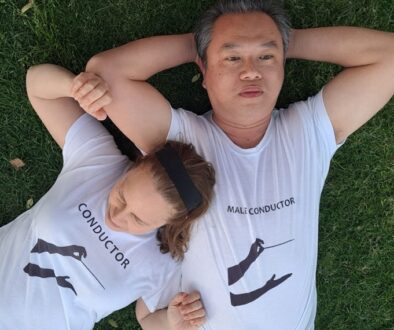
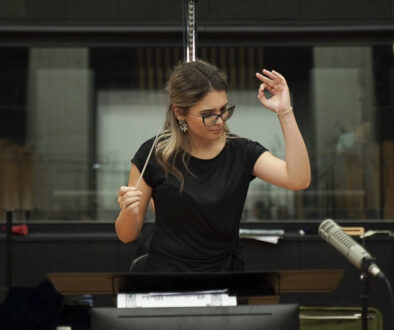
And yes, beauty is in the eye of the beholder. That applies across the board, by the way also to male conductors. We like to pretend that conducting is purely about technique and score knowledge, but it has always been about presence. About projection. About how someone walks into a room and what happens when they raise their arms.
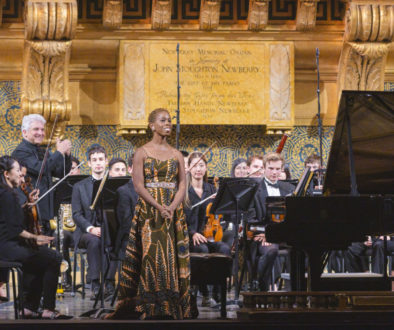
Conducting has a lot to do with charisma. It is communication on multiple levels: with the orchestra, with the audience, with the space itself. There is an energetic exchange in a hall that cannot be replicated on a screen. The audience feels it, the orchestra feels it, and the conductor reacts to it. Remove that dimension, and you are no longer judging the full art form.
At the same time, the idea of removing visual bias comes from a real and necessary place. Prejudice exists. We all carry it, consciously or not. The problem is that we pretend we don’t.
Total neutrality may be impossible. We are human, and listening is never a purely clinical act. What remains within our reach, however, is awareness: the willingness to recognize our filters, to question our assumptions, and to remain open. To listen – truly listen – with both mind and heart.