
The Mid Career Desert
Every few years, the classical music industry follows an all-too-familiar script. A barely 20-year-old conductor is pushed by a management machine onto the podium of major orchestras, marketed as the industry’s “next big revelation”. The early career is a whirlwind of hype, young artist showcases, and high-profile assistantships, if not even Music Director positions. The industry handles these fresh faces with a mix of fascination and – sorry to call it what it is: exploitation.
Fast forward twenty years
Our prodigy is now in his or her forties. The „fresh face“ label has worn off, replaced by the lines of middle age and a resume hopefully filled with years of steady work. Yet suddenly, the phone stops ringing. Emails remain unanswered. The spotlight has shifted to a new crop of twenty-somethings, while the legendary octogenarian (or nonagenarian, as a matter of fact) maestros still hold a monopoly on the most prestigious subscription weeks.
Welcome to the “Mid-Career Desert”: the most challenging, invisible, and psychologically grueling phase of a conductor’s life.
The Trap of the „New Discovery“
The classical music industry suffers from a structural blind spot: it is brilliant at launching careers and celebrating legends, but it frequently forgets how to sustain the middle.
For artistic administrators and marketing teams, a young conductor is an easy sell. They provide a vibrant narrative, dynamic PR photos, flashy social media presence, and the promise of a new era. At the other end of the spectrum, booking a veteran maestro offers guaranteed ticket sales and institutional prestige. It could, after all, be the last time you experience them.
Mid-career conductors, typically those in their late 30s through their late 50s, find themselves stuck in the dead zone. They are too experienced to qualify for young conductor grants or assistantships, but not yet old enough to be treated as revered sages. They are judged entirely on their merits, yet they are fighting for a dwindling number of guest-conducting slots in an industry that inherently hungers for novelty.
The 80/20 Reality: From Artistry to Administration
If a mid-career conductor finally has secured a coveted Music Director or Principal Conductor title, the reality behind the curtain is rarely what they imagined when they were studying scores in conservatory.
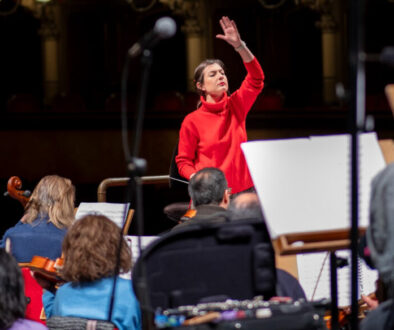
The public sees the Maestro step onto the podium (yes, the Maestro, not the Maestra…), command eighty plus musicians, and bow to roaring applause. That makes maybe 20%, if not less, of their job. What the public doesn’t see is the other 80%. For a music director, the mid-career phase is less about musical transcendence and more about institutional survival. A typical week looks less like a masterclass and more like a corporate marathon.
There is, for example, the donor chase, which may mean spending hours over expensive dinners begging wealthy patrons to fund the upcoming season. Or fighting with board members to keep innovative, diverse contemporary programming on the schedule when the box office demands yet another Beethoven cycle. Not to forget dealing with internal politics: navigating personnel disputes, union negotiations, and the delicate psychological management of an orchestra full of brilliant musicians who have played the standard repertoire at least fifty times before.
By the time they actually raise the baton in rehearsal, the conductor is already exhausted from hours of administrative firefighting.
The Loneliest Podium
There is a unique psychological weight to this phase. Early in a career, mistakes are forgiven as „learning experiences.“ In mid-career, the stakes are absolute. Stepping in front of a major international orchestra as a guest conductor means facing a crowd of hyper-experienced musicians who can read a lack of podium clarity or an unformed musical concept within three seconds.
The performance high is intoxicating, but the crash is real. An hour after a triumphant Mahler symphony, the conductor is rarely at a glamorous afterparty. More often, they are sitting alone in a generic hotel room, eating room-service club sandwiches, and reviewing an Excel spreadsheet for a board meeting the next morning. Add to that catching a red-eye flight a few hours later to repeat the process somewhere else, and the glamour completely evaporates.
A Universal Crisis for Musicians
While the music director’s duties are unique to the podium, this mid-career desert is a reality that applies to almost all classical musicians.
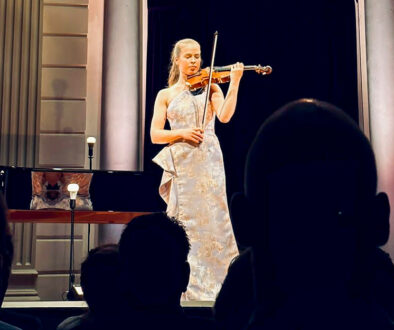
Singers and instrumentalists face the exact same industry lifecycle. The brilliant young competition winner who once graced every festival program suddenly finds themselves in their late 30s, navigating a world that has moved on to the next prodigy. Minus the board meetings, their desert is paved with the grueling, unglamorous work of self-preservation: endless travel, vocal or physical fatigue, constant auditioning to prove they still have it, and the relentless pressure to reinvent their brand while younger, cheaper talent nips at their heels.
For vocalists, this crunch is uniquely acute; unlike instrumentalists whose physical relationship with their instrument matures gracefully, the human voice has a strictly limited biological lifecycle and finite repertoire peaks. Navigating a fach transition or vocal fatigue while the booking phone stops ringing adds a deeply fragile, high-stakes layer to the mid-career singer’s desert.
The Real Work: Forging True Artistry
Yet, despite the isolation and the structural hurdles, the mid-career desert is exactly where true artists are made. When the initial hype fades and external validation dries up, a musician is forced to confront a fundamental question: Why am I doing this?
The work required to survive this phase is not romantic. It is the hard, quiet work of resilience. It is hours spent alone rethinking technique, studying scores with a deeper maturity, and pulling emotional depth out of a piece of music you have played a hundred times before. The ones who survive are those who shift their focus away from the career ladder and project it entirely into the music. Without the pressure of being the „next big thing,“ their interpretations deepen. They stop trying to impress the critics or the management machines and start building meaningful, long-term relationships with their music and their audiences.
It is the period where a talented young musician finally burns away the superficiality of the stage and transforms into a true master.